
How to Prep for Preschool Drop-Off Without the Tears
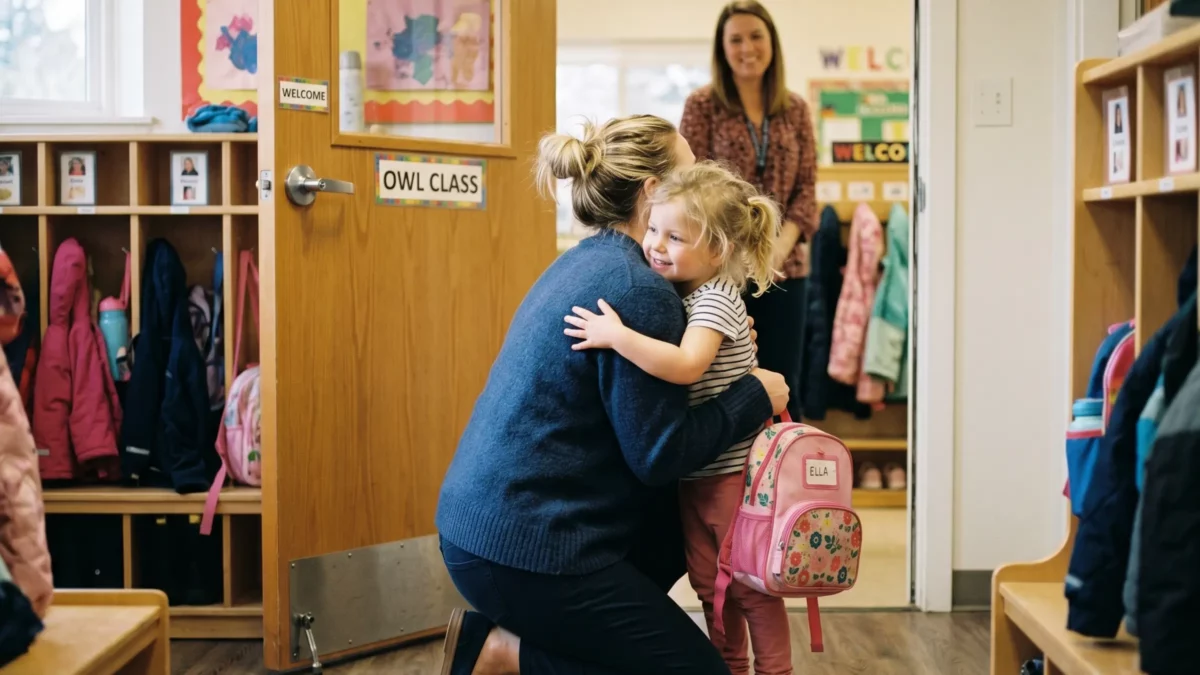
A smooth preschool goodbye is absolutely within reach, and a little preparation this summer is the secret. Whether your child bounds toward new adventures or clings tight at the door, you can set the stage now for calm, confident mornings come fall.
Some tears at drop-off are normal and even healthy. They mean your child loves you and feels safe with you. You are not aiming for zero feelings, just a goodbye that feels steady and loving for both of you. Here is how to get there, one gentle step at a time.
A quick tip from One Place
Start practicing short goodbyes this summer, well before the first day. A few low-stakes separations now build your child’s confidence that you always come back.
Practice the goodbye before day one
Confidence comes from practice. Over the summer, build in short, predictable separations: an hour with a grandparent, a morning with a trusted friend, a stretch at a church nursery or a play program. Each time, say a warm goodbye, leave, and return when you said you would. Your child learns the most reassuring lesson of all, which is that goodbye is always followed by hello.
Keep these practice runs positive and brief at first, then stretch them a little longer. By fall, the rhythm of leaving and returning will feel familiar instead of frightening.
Create a goodbye ritual
Children feel safe with the predictable, so give your goodbye a small, repeatable ritual. A special handshake, two quick hugs and a high five, or a cheerful phrase like “see you after snack” gives your child something to count on. The ritual becomes a tiny anchor in a big new room.
Whatever you choose, keep it the same every day. Sameness is soothing, and your child will come to trust the pattern even when the morning feels wobbly.
Keep your goodbye short and confident
It is tempting to linger when your child looks teary, but a long, worried goodbye can actually stretch out the hard feelings. Instead, offer your ritual, a warm smile, and a confident exit. Your child reads your cues closely, so when you project calm trust in their teacher and their day, they borrow that confidence.
This is often harder on parents than on children. Many little ones settle within minutes of a parent leaving. Trust the teachers to comfort and redirect, and know that a quick, loving goodbye is a gift, not a desertion.
Talk through the day ahead
The unknown is what feels scary, so make preschool familiar before it begins. Walk your child through a typical day: circle time, snack, outdoor play, story time, individual play, and potty breaks. Then invite their questions and feelings. For a fuller set of summer preparation ideas, see our companion guide, How to Prepare Your Toddler for Preschool.
If your child’s program offers a classroom visit or a meet-the-teacher event, take it. North Carolina Pre-K, for example, often includes a teacher home visit before the year begins, which is a wonderful chance to put a friendly face to the big new place. A trial run, even a short one, can melt a lot of first-day nerves.
Send a comfort from home
A small reminder of home can be a powerful comfort. Tuck a family photo into a backpack pocket, slip a tiny laminated picture into a lunchbox, or send a special keepsake your child can hold when they miss you. Some families make a little collage or scrapbook of loved ones for the early days.
Check your program’s policy on comfort items first, then choose something small and replaceable. Just knowing a piece of home is close by can steady a worried heart.
Set up calm, unhurried mornings
Rushed mornings raise everyone’s stress, and a frazzled start can spill straight into drop-off. Set the stage the night before: lay out clothes, pack the bag, and choose breakfast together. Protect enough sleep, wake with a little buffer, and build in time for one more hug. A calm morning is the simplest gift you can give a smooth goodbye.
Expect big feelings, and a little backsliding
Big changes can bring big emotions, and sometimes a step backward. Your newly independent child might suddenly want help with shoes again, or grow clingy, withdrawn, or short-tempered. This kind of regression is normal and temporary. Watch your child’s nonverbal cues as much as their words, since three- and four-year-olds do not always have the language for what they feel.
When the feelings come, stay the steady, safe harbor. Skip the frustration, and offer patience instead. Naming emotions out loud helps, too: “It is okay to feel nervous. I feel a little nervous on new days sometimes, and then it gets easier.” Reading books together about starting school gives your child gentle language for their feelings; our guide to
daily read-aloud time is a lovely place to start.
Take care of you, too
Your feelings matter on this milestone. It is completely normal to feel proud and weepy in the same breath. Lean on other parents, trust the team you have chosen, and remember that the teachers want to partner with you. Many will happily send a quick update once your child has settled in. You are not handing your child off; you are widening the circle of people who care for them.
If the tears keep coming: a sample first week
Some children settle in a day or two, and others need a couple of weeks. Both are normal. If the tears are still coming after the first few mornings, a simple, predictable plan can help everyone find their footing. The goal is not to rush the feelings away, but to give your child the same gentle rhythm each day so the newness wears off.
- Day one and two: arrive a few minutes early, do your goodbye ritual once, hand off to a teacher, and leave with a confident smile even if your heart is racing.
- Day three and four: keep the exact same routine. Sameness is reassuring, so resist the urge to change the plan when there are tears.
- Day five: ask the teacher for a quick check-in at pickup. Hearing that your child laughed at snack or built a tall block tower helps you both.
If big distress lasts well beyond the first couple of weeks, that is worth a friendly conversation with the teacher rather than a reason to worry alone. Together you can spot small adjustments, like an earlier bedtime or a different comfort item, that make the morning smoother.
For Marine Corps families navigating a transition
Starting preschool can land in the middle of a deployment, a return home, or a recent move to the Camp Lejeune area. If your family is in a season of change, give your child a little extra steadiness wherever you can: the same goodbye ritual, the same comfort item, and honest, simple words about who will pick them up each day. If a parent is away, a photo clipped inside a backpack or a recorded bedtime story can keep that connection close. Our family resources can help you find support that fits military family life in Onslow County.
Partner with your child’s teacher
You and your child’s teacher are on the same team, and a little communication goes a long way. Before the first day, share anything that helps them care for your child well: a nickname, a favorite comfort strategy, allergies, or news of a recent change at home like a move or a deployment. Teachers genuinely want to know what makes your child feel safe, and that head start helps them tailor a warm welcome.
Ask about the program’s drop-off routine, too, since many have a rhythm that makes goodbyes easier, like a window wave or a special helper job that gives your child something to look forward to. Trust the team you have chosen, and let them reassure you. A quick, honest check-in at pickup, or a short note when something is on your mind, keeps the partnership strong all year long.
A few gentle things to avoid
Just as helpful as knowing what to do is knowing what tends to backfire. Try not to sneak away while your child is distracted; a goodbye that never happens can leave them more anxious the next day. Resist drawing the goodbye out, too, since lingering often makes the feelings bigger rather than smaller. Skip bribes and big promises, which set up tricky expectations, and avoid scolding the tears, which are simply your child’s way of saying they will miss you. Above all, try not to let your own worry show in your face or voice. Children read our cues closely, so a calm, confident goodbye tells them that this new place is safe.
Why a Gentle Start Matters
The way a child experiences early goodbyes helps shape how safe and confident they feel in the world. When you prepare with warmth, keep your word, and return as promised, you strengthen the secure bond that lets your child explore boldly and bounce back from hard moments. That steady, trusting bond is one of the most powerful supports a child can carry through life.
A calm drop-off was never about raising a child who never cries. It is the slow, daily lesson that the world is safe, that goodbyes are temporary, and that they are deeply loved. That is a beautiful way to begin.
Frequently Asked Questions
Is it normal for my child to cry at preschool drop-off?
Yes, and it is often healthy. Tears mean your child loves you and feels safe with you, and many little ones settle within minutes of a parent leaving. The aim is a steady, loving goodbye, not a child who never feels upset.
How do I make preschool drop-off easier?
Practice short goodbyes over the summer, create a simple goodbye ritual, keep your exit short and confident, talk through the school day ahead, and send a small comfort from home. Calm, unhurried mornings help too.
How long does it take a child to adjust to preschool?
Some children settle in a day or two, others need a couple of weeks, and both are normal. Keep the same daily routine. If big distress lasts well beyond the first couple of weeks, talk with the teacher about small adjustments.
We’re Here to Help
One Place is your partner all year long. If you have questions about programs, resources, or finding support for your family in Onslow County, reach out anytime at 910-938-0336. We are glad to help you find your next step.
Follow along on Facebook, Instagram, and LinkedIn for more ideas, and tag us when you try one. We love seeing Onslow County families in action.
Getting ready for preschool this fall? Learn about Onslow County’s free preschool programs and find more support in our family resource hub.
Want to help every child in Onslow County thrive? Your gift supports safe care, early learning, and hope for local families. Donate today.